
Our Factory
In-house molding and finishing: compression molding, post-curing and deflashing, printing and laser, plus final inspection.
Core Production Capabilities
Compression Molding
Compression molding for keypads, gaskets and custom parts.
Post-curing & Deflashing
Post-curing for stress relief, then cryogenic or hand deflashing depending on volume.
Printing & Laser
Multi-color printing and laser for legends and branding.
Inspection & Shipping
Dimensional sampling, full cosmetic check, hardness sampling; physical properties require third-party testing on finished parts.
Molding, finishing and materials under one roof
On-site photos taken November 2026. To see a specific process, book a video audit and we will walk it live.
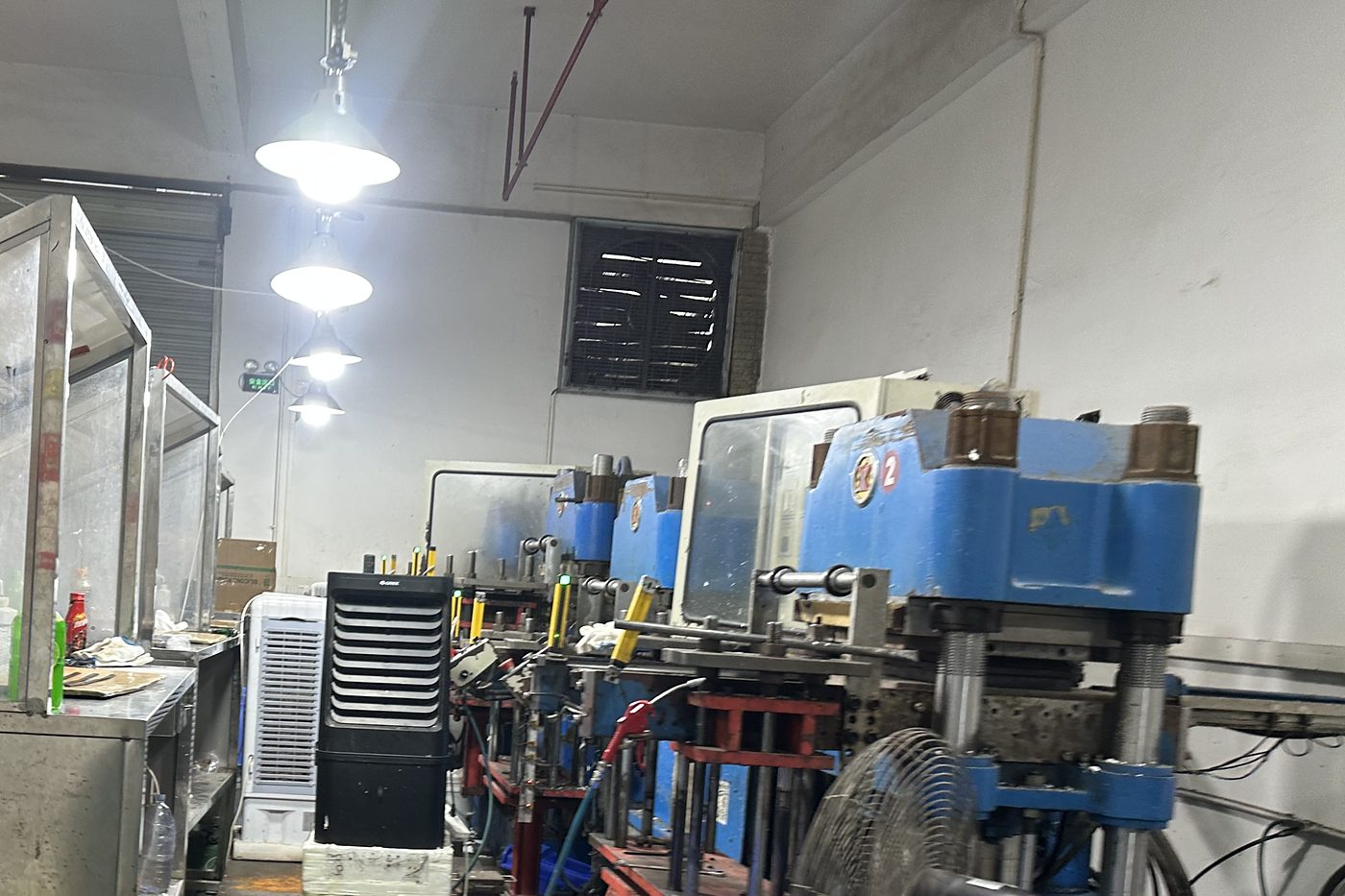
Compression molding line
Lines are scheduled by part type. Curing temperature, time and pressure are locked after validation.
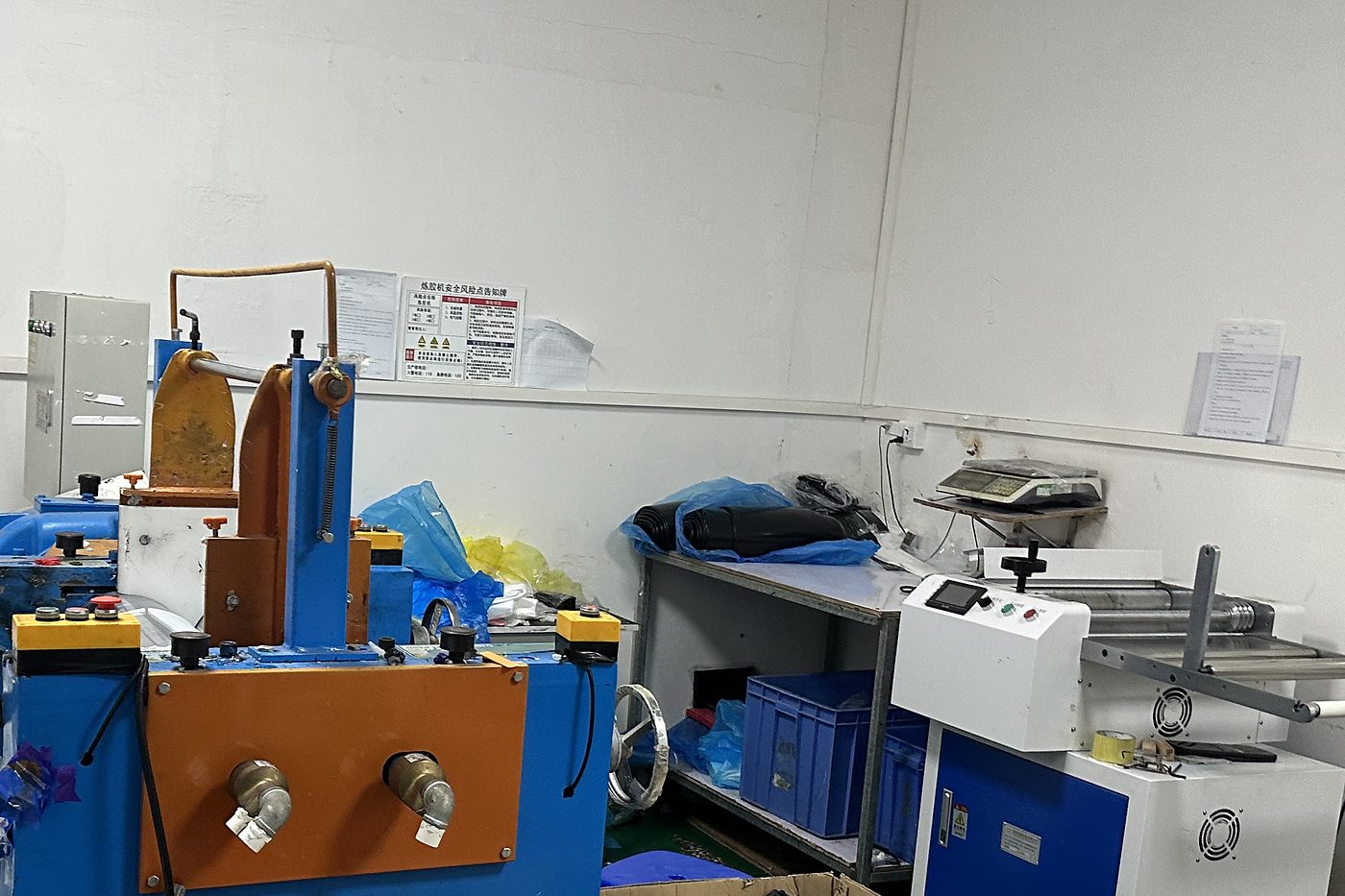
Screen printing & UV curing
Printing and UV curing are done in-house, not outsourced. Legend adhesion is accepted by cross-cut test.
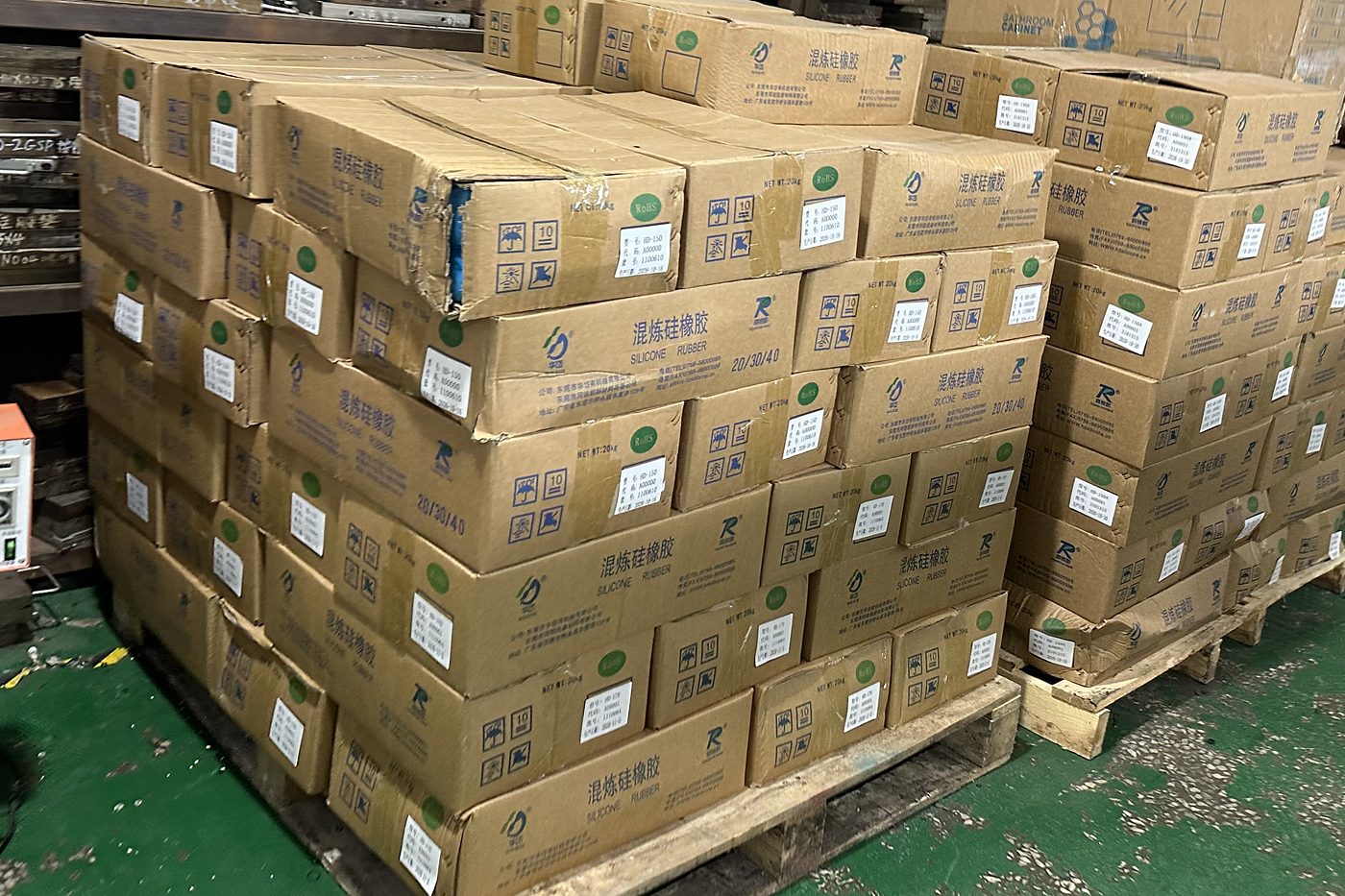
Silicone compound store
Compound arrives by lot, is inspected and sampled on receipt, and is traceable by lot number to supplier.
Testing Support for Your Target Market
The items above indicate available third-party testing support; specific scope and issuing lab are agreed per order.
From raw material to shipment: every gate
Many audits only count machines, but what actually drives yield is whether each step leaves traceable records. Below is our actual flow from raw material to shipment, with a checkable record at every stage. Floor area, machine count and headcount are best verified on a video or on-site audit — we prefer to be judged on process control.
| Stage | What happens | Control point |
|---|---|---|
| Compound | Select compound by application: food-grade, oil-resistant, flame-retardant, anti-yellowing | Incoming inspection and retained samples; traceable by lot to material and supplier |
| Tooling & maintenance | Mold design, steel machining, trials, scheduled maintenance and refurbishment | Mold-life counting with proactive refurbishment reminders before end of life |
| Molding | Lines are scheduled by part type — keypads, seals and thick-walled parts run on separate lines to limit tool changes | Curing temperature, time and pressure locked once validated |
| Post-curing & deflashing | Stress relief and flash removal | Dimensional stability and cosmetic consistency are caught here |
| Secondary processing | Silk-screen, pad printing, laser engraving, soft-touch coating | Legend adhesion (cross-cut test) and color-difference comparison |
| Inspection & shipping | Dimensional sampling, full cosmetic check, hardness sampling; functional testing for conductivity or sealing | Inspection report per shipment, retained samples, traceable lots |
Testing and compliance: how to phrase it correctly
This point must be stated plainly: test reports are issued by qualified third-party laboratories — a company does not "hold" these certificates itself. We work with silicone raw materials covered by third-party testing against multiple regulations, and can arrange finished-goods testing for your target market. Every report can be verified by its number on the issuing laboratory’s website.
- Mainland China: GB 4806.16 food-contact series (2025 edition currently in force).
- North America: FDA 21 CFR 177.2600 migration testing.
- European Union: LFGB and REACH SVHC screening, plus RoHS.
- Additional items on request: California Prop 65, PAHs, PFAS, BPA and organotin.
Planning a factory audit? Do it this way
- Start with a video audit: workshop, running machines and inspection area — cheapest way to filter out intermediaries.
- Allow about 1.5 hours on site and follow this order: molding → tooling → secondary processing → inspection.
- Ask to see three documents: the current production schedule, original outgoing inspection reports, and gauge calibration certificates.
- Settle the contract details at the same time: mold ownership, refurbishment cost and complaint-handling deadlines — these three cause the most disputes if left unwritten.
- Navigate to the factory and shipping address (No. 102, Building 130, No. 51 Paotai Road, Lisonglang, Gongming Street, Guangming District, Shenzhen, Guangdong, China); the address on the business license is the registered address only.