
Instrument Panel Keypad
Weatherproof instrument keypads with dust and water resistance.
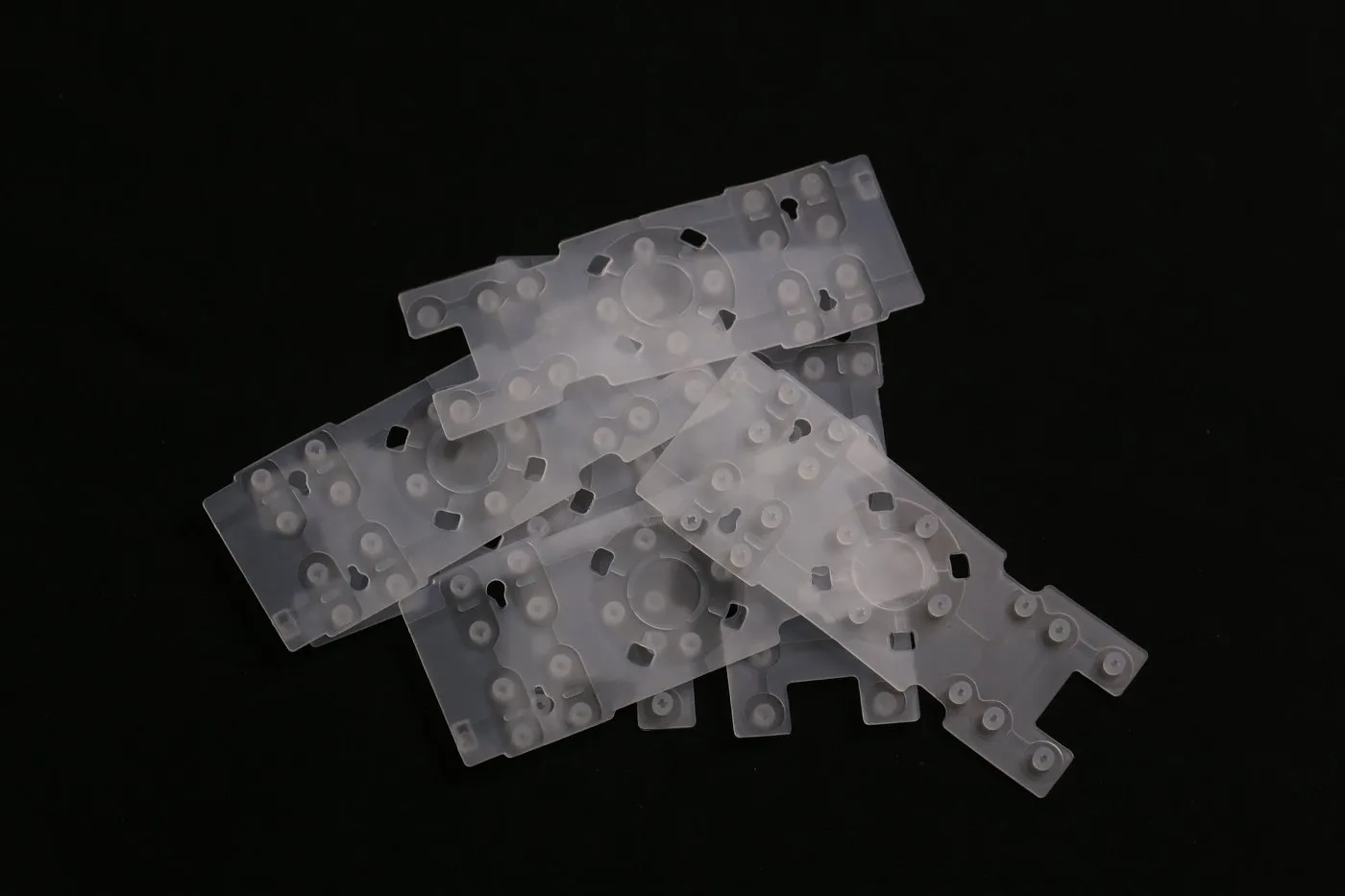
Instrument Panel Keypad Specifications
| Parameter | Standard | Custom options |
|---|---|---|
| Material | Fumed silicone / standard silicone | Food grade, flame-retardant (UL94 V-0), conductive silicone |
| Hardness | 40°–60° Shore A | 30°–80° Shore A |
| Operating temperature | -40°C to 230°C | Special high/low-temperature compounds |
| Dimensional tolerance | ±0.1mm (small parts) | ±0.05mm precision grade |
| Conductive method | Carbon pill / printed conductive ink | Metal dome, gold-plated contacts |
| Cycle life | Standard 50K–200K cycles | High-life formulas 500K+; metal domes 1M–5M cycles |
| Waterproofing | Integrated sealing skirt | Up to IP67 |
| Surface finish | Silk-screen, laser etching | Coating, epoxy doming, two-shot molding |
| Color | Pantone-matched | Clear, translucent, fluorescent |
| Sampling lead time | 5-7 working days (existing mold) | 7–10 days for new tooling (up to 12 for complex parts) |
| MOQ | From 50 pcs | Volume-based pricing |
| Testing support | SGS reports on raw materials (12 regulations covered) | RoHS / REACH testing support available |
Customization Process
Applications
Widely used in remote controls (TV/AC/STB/car), communication terminals (intercom, vehicle center console, cabinet panels), instruments, medical device panels, consumer electronics (gamepads, keyboards, access control), and industrial controllers requiring HMI buttons. Custom per drawing/sample; free 1-3 samples, 5-7 working day sampling accelerates your product launch.
Process & Certifications
We use high-precision steel molds with both liquid silicone (LSR) and solid silicone routes; hardness adjustable 30-80 Shore A; conductive carbon pill co-vulcanized for stable click. RoHS / REACH third-party test reports available on request; UL94 V-0 flame-retardant formula optional on selected models; IP67 sealing achievable with overmolding. Salt-spray, UV aging, vibration fatigue, and key-cycle (50K-5M) test reports also available on request. Characters use silicone ink silk-screen + topcoat or laser engraving, withstanding 500+ alcohol wipes.
For an instrument keypad, reliability lives in the contact, not the rubber
Same silicone, same tool, a different contact method, and service life changes by an order of magnitude. Industrial panels use three approaches: carbon pills bonded under each key, a conductive silicone sheet, or gold-plated metal contacts. Carbon pills are cheapest with the crispest feel, but once the carbon layer wears through you get intermittent contact. A conductive sheet suits dense key arrays with excellent consistency, at the cost of a softer per-key feel. Gold-plated contacts last longest and cost the most, in both unit price and assembly. Pick by how many presses a day the device actually sees.
| Item | Typical range | Notes |
|---|---|---|
| Key travel | 1.5–3.0 mm | Must match the PCB contact gap or the key feels dead |
| Actuation force | 150–350 gf | Go to the upper end for gloved operation |
| Key life | 500k–1M presses | Carbon pills at the low end, gold plating at the high end |
| Ingress protection | IP65 or IP67 available | Sealed by a compressed lip around the whole panel, not by potting |
Three problems that slip through at the prototype stage
- A dead-feeling key — the gap between the conductive layer and the PCB is larger than the key travel, so the key bottoms out before it makes contact. Put that gap on the drawing as its own dimension; do not leave it to trial and error at assembly
- Backlight bleeding — a gap between the light guide and the keycap lets light leak sideways into the neighbouring key. Either mold in a light-blocking rib, or form the guide and keycap as one piece
- Sealing patched with potting — potting raises the IP rating but hardens the keys and shortens travel. Seal with a perimeter lip under compression instead, and leave room for that lip in the tool from the start
Frequently Asked Questions
What conductivity methods do silicone keypads use?+
Three common types: 1) Carbon pill (low cost, 1M cycles); 2) Metal dome (POM, crisp tactile feel); 3) Conductive ink printing (for membrane circuits). Choose based on feel, lifespan, and budget.
Are silk-printed characters on silicone keypads durable?+
Using silicone ink silk-screen + secondary vulcanization, characters resist 500+ alcohol wipes, sweat, and abrasion — 5+ years outdoors without fading.
Can IP67 keypads pass salt spray testing?+
Integrated silicone overmolding, 48h salt spray without corrosion. Third-party salt spray, UV, and vibration test reports available.
Related Reading
More in This Category
Remote Control Keypad
Multi-key conductive silicone keypad with long life for TV, AC and car remotes.
Silicone Communication Keypad
Silicone keypad panel for intercoms and communication devices, one-piece design.
Car Steering Wheel Keypad
Custom silicone multi-function keypad for car steering wheels, with volume, answer and power keys.