
Silicone Gasket
Custom-shaped silicone gaskets for appliances, lighting and automotive.
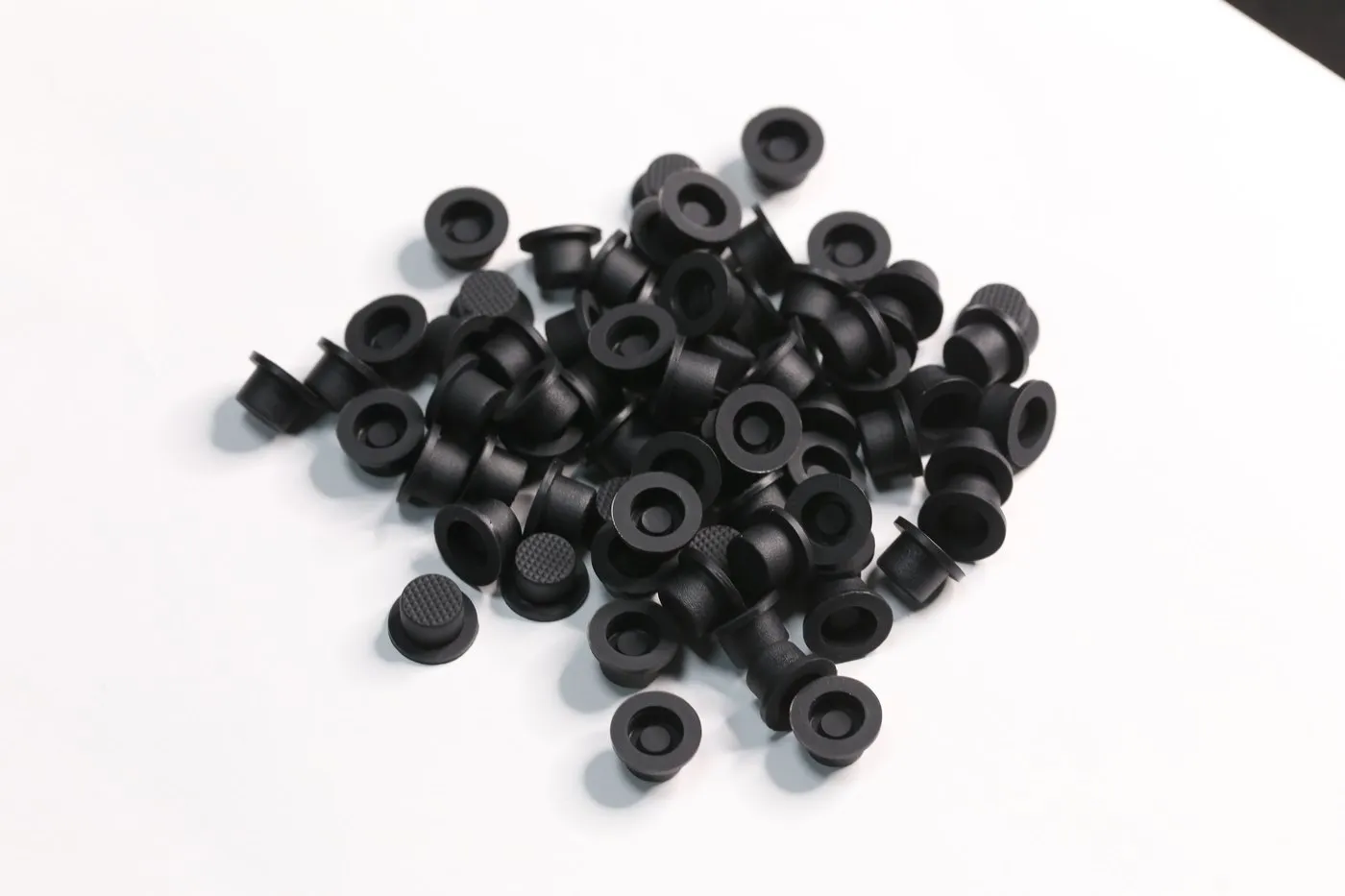
Features
- ✓Custom mold from drawings
- ✓10-80 Shore A hardness
- ✓Low compression set
Silicone Gasket Specifications
| Parameter | Standard | Custom options |
|---|---|---|
| Material | Standard silicone / fumed silicone | Oil-resistant, acid/alkali-resistant, flame-retardant compounds |
| Hardness | 50°–70° Shore A | 30°–90° Shore A |
| Operating temperature | -50°C to 250°C | High-temperature special compounds |
| Cross-section tolerance | ±0.08mm | ±0.05mm precision grade |
| Inner diameter range | 2mm–500mm | Oversized parts on request |
| Cross-section profile | O-ring / rectangular | Custom profiles per drawing |
| Sampling lead time | 5-7 working days (existing mold) | 7–12 days for new tooling |
| MOQ | From 50 pcs | Volume-based pricing |
| Testing support | SGS reports on raw materials (12 regulations covered) | RoHS / REACH testing support available |
Customization Process
Applications
Used across hydraulic/pneumatic, home appliances, electronics, medical devices, food machinery, automotive, EV batteries, pumps/valves, and sanitary ware for sealing, dust-proofing, shock absorption, buffering, and insulation. Custom per drawing/sample, free sampling, stable lead time, helping cut BOM costs.
Process & Certifications
Materials range from food-grade, medical-grade, oil-resistant, to high-temperature compounds; hardness 30-70 Shore A; standard tolerance ±0.05mm (precision ±0.02mm). O-rings per GB/T 3452.1 and AS568. FDA, LFGB, RoHS, REACH reports; material certificates and dimensional inspection. Compression set (ASTM D395) ≤15% at 150°C×22h.
Silicone gasket: what we can actually make
Custom gaskets are made to drawing or to a physical sample. The ranges below are what we quote against day to day. Values outside them are not impossible — they need evaluation first: below 0.3 mm thickness, flat sizes approaching the press platen limit, or durometer under 20 A all require a look at the geometry and volume. Figures are typical values, not a per-batch guarantee; the signed sample and drawing govern.
| Item | Typical range | Note |
|---|---|---|
| Durometer | 30–80 Shore A | Seals usually sit at 50–70 A; softer needs a look at recovery and assembly |
| Thickness | Moulded 0.5–10 mm | die cut 0.5–5 mm | Under 0.5 mm risks short shots and curling — sample first |
| Flat size | Limited by press platen, evaluated per drawing | Large parts are better split or die cut — a different cost tier |
| Tolerance | Typically ±0.2 mm | down to ±0.1 mm | Tighter tolerance raises tooling and inspection cost |
| Temperature | -60 to +200 °C (short excursions 250 °C) | Sustained heat needs a specified compound; general-purpose grades harden faster |
| Colour and secondary ops | Natural, black, white and custom colours; adhesive backing and printing available | Adhesive choice drives peel strength and heat resistance — matched to the substrate |
Typical applications and how the gasket is made
- HD connectors, control boxes, battery compartments — thin wall at medium durometer (50–60 A), moulded or die cut, with low compression set
- Flange gaskets and pipe interfaces — usually die-cut flat parts; uniform thickness at volume is the cheapest route
- Power supplies, LED luminaires, charger housings — seals and insulates at once; silicone has high volume resistivity and does not corrode contacts, mostly moulded
- Medical and laboratory equipment housings — usually platinum cure; where low extractables and low odour matter, state the contact media on the drawing
- Food machinery and kitchen equipment — food-grade compound for food-contact parts, with test items set by the target market
If you are sourcing a custom silicone gasket manufacturer rather than a specific part number, the useful order is: can they explain the process boundaries (moulding, die cutting, extrusion), can they state tolerance and durometer ranges, and only then compare price. What buyers call a high purity silicone gasket requirement — low extractables, low odour — is really a question of compound system plus post-curing, not something a different supplier fixes by default. Settle that and quotations become comparable.
Pick the process before the compound
The same silicone gasket behaves differently depending on how it is made — compression moulding, die cutting and extrusion are three different products, at different price points and tolerances. Simple flat shapes at volume: die cut. Steps, locating posts or locally thickened areas: moulded. Long runs with a constant cross-section: extruded and cut. Settle the process first; the compound only matters after that.
| Method | Best for | Limitation |
|---|---|---|
| Compression moulding | Steps, posts, local thickening | Steel tooling required, highest upfront cost |
| Die cutting | Flat parts, high volume, uniform thickness | No 3D features, visible cut edge |
| Extrusion | Long runs with constant profile | Limited profile complexity, ends must be joined |
Four real reasons silicone gaskets fail
- Insufficient clamping, not bad rubber — a gasket seals by compression recovery; under-torqued bolts defeat any compound
- Stacked thickness tolerance — a warped cover plus a thin gasket means some areas never contact
- Wrong media resistance — silicone handles heat well but swells in non-polar oils and solvents; use FKM or NBR for fuel, oil and thinners
- Tear strength ignored — thin-wall gaskets torn during assembly point to tear resistance, not durometer
Where a gasket must seal and insulate at the same time — power supplies, luminaires, battery compartments — silicone is a good fit: high volume resistivity, good weathering, no corrosion at contacts. For these parts, specify the working temperature and contact media on the drawing; it is far more useful than writing "food grade".
Frequently Asked Questions
What temperature range can silicone seals withstand?+
Standard food-grade silicone: -60°C to +230°C; specialty compounds tolerate +300°C short-term. We select Shore A 30-70 and compound per your working conditions.
What is the compression set of silicone gaskets?+
High-resilience compound: ≤15% compression set at 150°C × 22h (standard); specialty ≤10%. ASTM D395 test reports available.
What is your MOQ and sampling lead time?+
From 50 pcs, small-batch trials supported. Free 1-3 samples (customer pays shipping); sampling 5-7 working days; mass production 15-25 days.