
Large Silicone Ice Tray
Large-capacity silicone ice tray, easy-release cubes, also for food and baking.
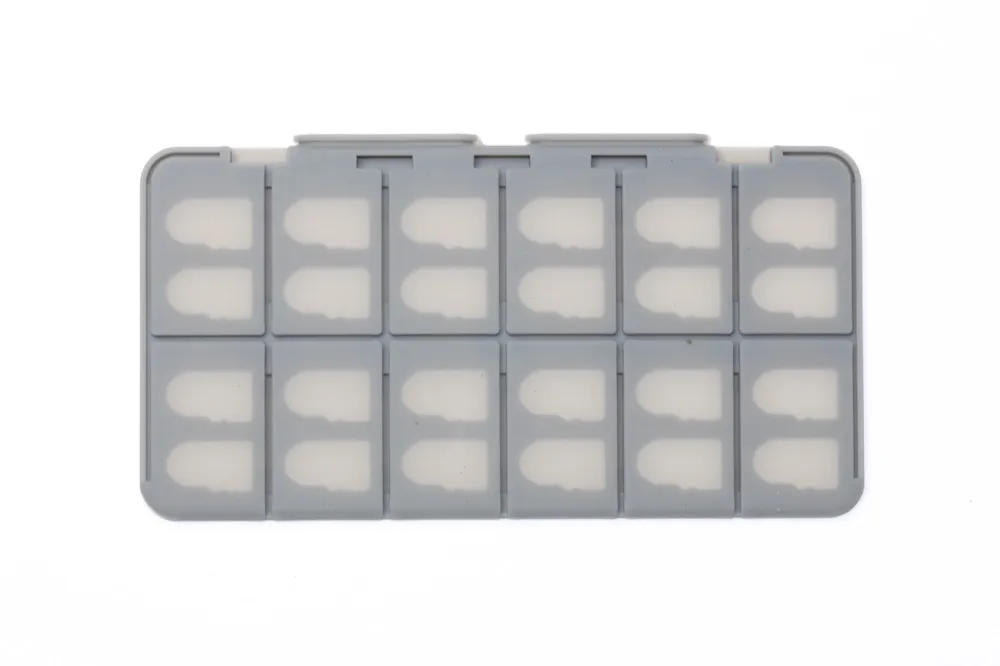
Features
- ✓Large capacity, multiple cubes
- ✓Soft silicone, effortless release
- ✓Wide temperature range
Large Silicone Ice Tray Specifications
| Parameter | Standard | Custom options |
|---|---|---|
| Material | Food-grade fumed silicone | Platinum-cured + post-cured, low odor and residue |
| Hardness | 50°–70° Shore A | 30°–80° Shore A |
| Heat resistance | -40°C to 230°C | Microwave, oven, dishwasher and sterilizer safe |
| Molding process | Compression molding | LSR injection, two-shot molding |
| Dimensional tolerance | ±0.2mm | ±0.1mm precision grade |
| Surface finish | Matte / glossy / soft-touch coating | Printed, embossed or laser-etched logos |
| New tooling lead time | 10–15 days | Assessed by part complexity |
| Tooling cost | Typical single-cavity mold RMB 3,000–8,000 | Quoted by size and structure; volume orders negotiable |
| Sampling lead time | 5-7 working days (existing mold) | Follows tooling lead time for new molds |
| MOQ | From 50 pcs | Volume-based pricing |
| Testing support | SGS reports on raw materials (12 regulations covered) | GB 4806.16 / FDA / LFGB testing support available |
Customization Process
Applications
Serving brands, e-commerce sellers, gift companies, and restaurant chains with end-to-end OEM/ODM. Perfect for baking, baby food, bento, outdoor, travel, and mother-baby marketing. Low MOQ, free sampling, fast time-to-market for your brand.
Process & Certifications
100% food-grade pure silicone, free of BPA, PVC, phthalates, and lead. Withstands -40°C to +230°C for ovens, microwaves, dishwashers, and freezers. Tested for thermal cycling, demolding, and colorfastness for no deformation, no discoloration, no odor. Pantone colors and custom logo silk-screen available.
The hard part of an ice tray is staying soft below zero
Silicone that feels soft at room temperature can go stiff as plastic at -18 °C — you cannot twist the cubes out, and forcing it tears the tray. The key property is not the durometer number but low-temperature flexibility: the glass transition must sit well below freezer temperature, which usually calls for a cold-grade compound rather than a general-purpose one. Durometer typically runs 50–70 Shore A. Too soft and the cubes slump and the walls will not hold shape; too hard and release needs force, and twisting cracks the tray at the base fillets first.
| Parameter | Typical range | What it affects |
|---|---|---|
| Durometer | 50–70 Shore A | Release feel versus wall rigidity |
| Wall thickness | 1.2–2.0 mm | Thin cracks when frozen, thick resists twisting |
| Low-temp flexibility | Needs a cold-grade compound; general grades stiffen below -25 °C | |
| Tear strength | ≥20 kN/m | Whether it tears at the fillet when twisted |
Three field failures, two of them structural
- Cracking at low temperature — almost always a general-purpose compound. A cold-grade material costs more, but it is the only real fix; thickening the wall does not help
- Tearing at the cube base fillet — the radius is too tight and concentrates stress. Setting the fillet at 1–1.5 times wall thickness makes a clear difference
- Off odour — incomplete post-curing. For food-contact use the post-bake cannot be shortened; it is also the step that drives out volatiles
Frequently Asked Questions
Can silicone kitchenware be used in ovens and microwaves?+
Food-grade silicone tolerates -40°C to +230°C — safe for ovens, microwaves, dishwashers, and freezers. BPA and phthalate-free; FDA / LFGB food-contact test reports available on request.
Do silicone baking molds stick? How to release?+
Silicone has natural release properties — no greasing needed. For intricate patterns, chill 5-10 min before demolding for perfect detail retention.
What is your MOQ and sampling lead time?+
From 50 pcs, small-batch trials supported. Free 1-3 samples (customer pays shipping); sampling 5-7 working days; mass production 15-25 days.